Tuesday, September 5, 2023

These Are a Few of My Favorite Things

Muncho Lake, British Columbia

There is a section of the Alaska Highway that always captures my heart. The area between the Liard River and Toad River offers some of the best wildlife viewing ever. 

This time was no exception. Near the Liard River and Hot Springs, the Alaska Highway is known for its Wood bison, a different subspecies of the well-known Prairie bison. Wood bison are distinguished by their habitat and their squared-off shoulders. We even had to stop for a bison jam. One of the bulls showed recent scars from the last rut. Of course, the babies always get attention. 


Wood bison bull


Bison jam along Alaska Highway

Bull with scars from recent rut encounter

Wood bison baby

We saw at least nine black bears grazing along the roadside. These bears are in hyperphagia now, an insatiable hunger necessary to ready themselves for the onslaught of winter and their six to seven months of hibernation. Most were grazing berries. 


Black bear grazing berries

Black bear (probably first year on his own) grazing berries

We also saw a Golden eagle feasting on carrion. Later, we saw a small herd of Stone sheep. 


Golden eagle feasting on carrion on Alaska Highway


We camped at our favourite MacDonald Provincial Park on Muncho Lake. I have so many beautiful memories from this place. It is a homecoming of sorts. 


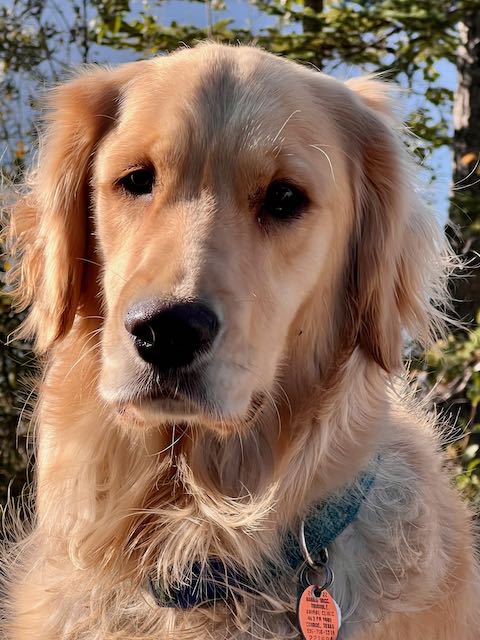
Even the rain didn’t deter. Although cloudy skies meant we would see no northern lights, it was still beautiful. And Sam loved swimming in the crystal clear, albeit cold, cold water. 


Panoramic of Muncho Lake, British Columbia


We awoke to frost on the pumpkin. A lady in the campground said her thermometer measured 28 degrees. Burrrrrrrr!


A frosty morning on the Alaska Highway


We took the drive to Toad River and spied a moose cow in a pond along the road. We laughed out loud… she was in the exact place I had photographed a moose cow during our first Alaska trip in 2010. Although the sun wasn’t in our favour, we still managed to take a few photos. 


Moose cow on Alaska Highway


Later, we spied a wayward porcupine. Their eyesight is poor, so I hopped out of the truck and photographed him at a distance. 


Porcupine on Alaska Highway


Then we spied some Woodland caribou. Sam was having a blast, smelling all the new creatures. This particular caribou was interested in her smell, too. 


Woodland caribou on Alaska Highway


The temperature was in the 60s by afternoon. We took a hike up the Mineral Licks Trail, enjoying the sunshine. It was a splendid day, indeed. 


David and Sam on Mineral Licks Trail


By evening, clouds rolled in again. It has rained every night for the past three weeks. This was probably our last chance to see the northern lights. I was a bit disappointed, but the reality is that we have already been blessed so very much this trip… and for that, I am forever grateful. 


Tomorrow we head even further south. We had planned on travelling to Yellowknife and Wood Buffalo National Park where we first saw the northern lights. But raging wildfires have evacuated the town, and we were discouraged from visiting there. When we discovered the road between the Alaska Highway and Yellowknife closed, we abandoned the idea completely. So we pray for the community’s safety and move on. 


Our next stop will be Jasper in Alberta, only about six hours from the US border. We have a date (I hope) with a bull elk at Whistler campground. The elk should be in rut and are always wonderful to see and photograph. And so we travel onward. 


Saturday, September 2, 2023

The Signpost Forest

Signpost Forest, Watson Lake, Canada

Please welcome guest commentator, David...

There are many memorable places along the Alaska Highway that are worth a stop. One such place is Watson Lake at Mile Marker 635. As the story goes, back in 1942, it was tradition for the Army to put signposts along what was called the Alcan Highway, showing direction and distance to nearby communities and towns, as well as cities around the world. 

During that time a young soldier named Carl P. Lindsey from Company B of the 341st Army was injured and sent to the Army air station in Watson Lake to recover. During his time there, his commanding officer put him to work repairing and painting the signpost there. Carl was know as the lonesome and homesick soldier, so he decided to add a sign from his hometown of Danville, Illinois. 

Little did he know what a tradition he would start as more and more people who visited Watson Lake added a sign from their hometown to what has become known as World Famous Signpost Forest. Today there are over 100,000 signs at the Signpost Forest in Watson Lake.


When the Third Time Is Definitely Not a Charm

Happy Birthday, #2 to Sam!

We have tried to take the Campbell Road twice before. It is a shortcut between Carmacks and Watson Lake. Both times forest fires kept us away. Although wildfires rage now near Yellowknife and Hay River, we were surprised to find the Campbell open. Let’s go!

The road turned to gravel past the town of Faro. We drove almost to Ross River before camping at Lapis Canyon. As we set up camp, David heard a distinct releasing of air. After all our taking care on the Dempster, we found ourselves with a flat tire on the Campbell. 


David changed the tire, and we decided to drive into nearby Ross River in the morning. Unfortunately, we couldn’t find a single place to fix the tire. We finally found someone to ask. He called a few folks then recommended we go back to Faro. 


The lady at the Faro visitor center sent us to Jeremy. The young man was very helpful and patched the tire for us. He said that recent construction had exposed sharp shale. They had repaired over twenty tires since construction had begun. And the construction continued throughout most of the remaining road to Watson Lake. 


With the tire repaired, we decided discretion to be the better part of valour and returned to Carmacks, taking the longer, albeit paved road to Watson Lake. 


It was Sam’s second birthday, so we stopped early at Fox Lake to give her a swim. The wind was blustery and cold, but Sam had a great time. When she had her fill, we all retreated to the camper and its heater. 


The next morning when David checked the air pressure in the patched tire, it registered only 15 pounds, less than half what it should. Heavy sigh. We needed another repair job. The problem was that this was Labor Day weekend, when most of Canada shuts down to “squeeze out the last bit of summer,” as one lady said. 


In Whitehorse we did find several tire repair shops open on Saturday. The shop we chose informed us that the tire had another hole in the sidewall, a fatal blow. Now we had to find a replacement. We checked every tire dealer, and all they had were snow tires… to the tune of $450 each, and we needed two to maintain balance. Finally, our original tire shop came up with a novel solution. It should get us through the rest of our Canada portion of this adventure. A perfect matching tire is on hold and awaits us in Spokane. 


It’s really quite a blessing how this has all turned out. Both times the tire went flat, we were safely tucked in a campsite rather than on a busy road. We have a good, albeit temporary fix. Another tire awaits us, and is in the Lower 48, which is always less expensive than Canada. After fourteen years, this is only our third tire issue… not a bad run considering the roads we travel!


We’re now heading to another favorite place on the Alaska Highway… Muncho Lake. 


Tuesday, August 29, 2023

A Parting Look at the Dempster

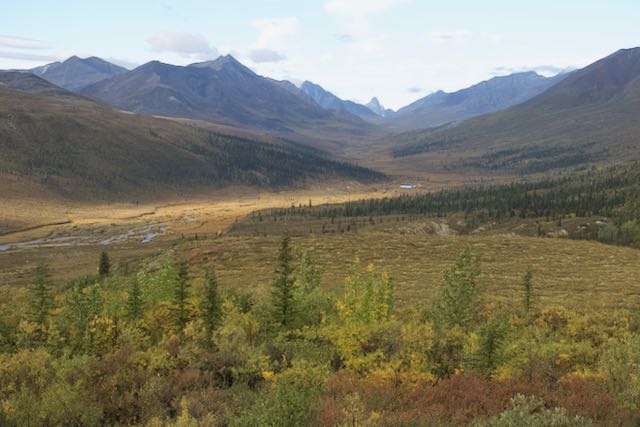
Here are just a few more photos from the Dempster.  Please know that none of them do justice to the beauty, splendor, and vastness of this amazing part of the world.


The Finale (The Dempster 2003, Part Four)


Dempster beautiful

It rained again most of the night. The entire truck was covered in muck. Every time we leaned against the running boards, or closed a door, or opened the camper, or touched a handle, we (or our clothes) would add another layer of mud. We began lifting Sam into the back seat to keep her paws and undercarriage clean. Our first order of business In Dawson City will be to wash the truck. 

We left Rock River and drove past Eagle Plains. It was too early to camp, so we drove on, stopping at a pull-off nestled in the boreal forest for the night. 

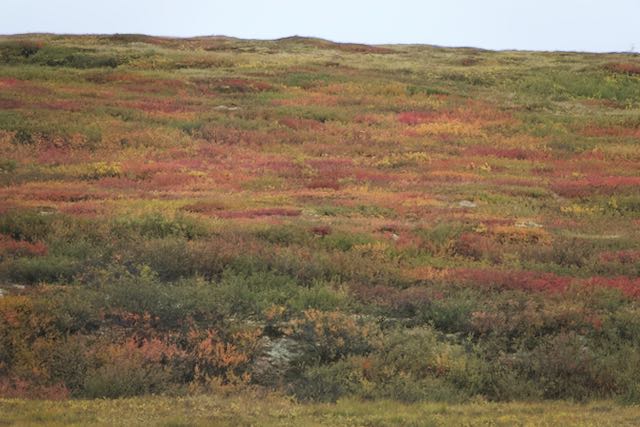
Again it rained, but the clouds began to clear in the early morning. We drove past Olgavie Ridge, admiring the fall colors. 


We stopped at a favorite campsite just north of the Tombstone visitor center, hoping to see the northern lights like we did in 2018. But it rained again that night. 

Our favorite campsite on the Dempster

We spent our last day on the Dempster just relaxing and enjoying the moment. A raven entered camp, and Sam went nuts.  David finally had to chase it away.


A raven taunts Sam

Chasing raven

Bye, Bye Blackbird


We made the short drive back to Two Moose Lake, and we actually saw two moose. Then we took a nice, long hike along the creek to the bottom of the Tombstone overlook.


A moose cow at Two Moose Lake


Tombstone from Valley hike

Another night in our camp spot, and another night of rain. It was bittersweet leaving the Dempster the next morning, but the clouds rolled back, and we were bathed in sunshine on our way out. 


It has been another successful run on the Dempster without losing a tire or having any major issues. We saw amazing animals, met some new friends (like Bill from Vancouver), and witnessed Autumn’s glory. 


We stopped at the entrance sign for a photo with Sam, commemorating our seventh trip up the Dempster. I'm thinking of hanging this photo next to a photo of Roxanne and us on our first trip. It will be a reminder of blessings and amazing moments and answered prayers. 


Commemorating a successful seventh trip up the Dempster.
.

Perhaps I should mention just one more time… the Dempster is my favorite road. 


I came... I saw... I put my pooties in the Arctic Ocean


Sunday, August 27, 2023

The Border Experience (Dempster 2023, Part Three)

Dempster in Autumn's Glory

We left Inuvik, hoping for sunshine, but found none. At least the roads weren’t so dusty after all the rain. We spied an Arctic Fox, then later a Red Fox hiding in the bush. 


We arrived in Fort McPherson and decided to spend the night at the campground near the Peel River crossing. Fort McPherson began as trading post in 1850 by the Hudson Bay Company.  The town is now mostly indigenous and has a population of about 650.  We drove around town, visiting the Anglican church  Again, it rained most of the night. 


Fort McPherson's Anglican Church

The next morning, we continued our drive through rain and/or heavy clouds. The Yukon/Northwest Territory border was socked in, covered in fog yet again. 


We were at a crawl in the truck, trying not to over drive the road, when we spotted a brown bear off in the ditch. We must have startled him as he grazed tubers on the roadside. He began to run. I stopped the truck, not wanting to frighten him further. He crossed the road in front of us and dashed uphill. Although the camera struggled to focus in the dense fog, I did manage to take this photo of what I affectionately call my spirit bear. 


Brown bear in fog


We camped at Rock River for the night. We had to pass on our favorite campsite because it was so muddy and opted for a lesser-used site covered in moss and grasses that was better (and cleaner) for Sam. 


Trying to un-muddy Sam

The next morning, the clouds began to break. We decided to drive back to the Arctic Circle, hoping to find more wildlife along the way. What we found instead was the Arctic Circle blanketed in Autumn’s glory. Amazing!


Dempster's Arctic Circle in Fall Foliage


A large group of Chinese tourists were at the Circle. They arrived in a dozen vehicles, popped a bottle of champagne, and took dozens of group photos, sometimes holding a Chinese flag. 


Meanwhile, Sam was consumed with locating every Arctic ground squirrel she could find. She is absolutely infatuated with them. 


On the way back to camp that evening, we drove back to the border, hoping to find caribou. Instead we spied two brown bears grazing tubers along the roadside. To say the least, we were thrilled. Brown bears are largely solitary animals. To find two foraging together was amazing. 


We must have watched the pair for several hours. They seemed completely oblivious to us, even though they were grazing only about fifty feet from us. Other vehicles would stop and join us, take a few photos, then head on their way. The bears never seemed to notice. 


It is such a privilege to observe how these creatures forage and interact. At one point, one of the bears must have spied a tasty morsel in the bush. He would raise on his hind legs, then bury himself back in the bush, chasing his prey. We could follow him by the frantically swaying alders in his path. I’m not sure he was ever successful in his hunt. 


We left the bears and returned to camp, feeling blessed and humbled. The next morning we returned to the border and we’re shocked to find the two bears still grazing by the roadside. We watched them for another half hour or so. Sam definitely  earned her bear-watching badge. She just sat in the backseat and quietly absorbed the moment along with us. 


After a while, we drove back to the border. It was still blanketed in fog. We again saw no caribou. One of the elders in Fort McPherson had told us that the younger men had hunted too early, running the caribou back over the mountain. He was obviously disappointed. If the caribou did not return along the Dempster road, it would be much more difficult for the rest of the clan to hunt their winter stores. 


Less than thirty minutes had passed between when we were at the border and when we arrived back at the spot where our two bears were grazing. They were gone. Vanished. Without a trace. David scanned the horizon with his binoculars but saw no sign of them. We felt a small miracle had occurred for us to have seen them and that we were truly blessed to have witnessed it. 


We now head south. Our time on the Dempster is drawing to a close. Just a few more precious days. 


Just Another Little Living Miracle

Arctic Ground Squirrel

Sam has become infatuated with the Arctic ground squirrels.  Several burrow beneath the Arctic Circle signpost on the Dempster Highway, and Sam has introduced herself to them all (on leash, of course). 

The First Nation peoples of Canada call the Arctic ground squirrel “tisk-tisk,” the sound an Arctic ground squirrel makes when it is alarmed. 


The squirrels live in burrows under the ground. They line their nests with grasses to help them keep warm during the winter. On the last day that they enter their burrow for the long winter months, they block the entrance with dirt.


During an Arctic winter, the temperature in the squirrel's burrow can drop below 0° Fahrenheit. Most mammals would die in temperatures that cold, but the Arctic ground squirrel is an amazing little animal. 


In the summer, the Arctic ground squirrel has the same body temperature as humans. Scientific research has proven that during hibernation the squirrel's body temperature drops from 98.6° F to 26.4° F. 


While water freezes at 32° F, somehow, the Arctic ground squirrel doesn’t freeze. This little squirrel reaches the lowest known body temperature of any living mammal. Scientists don't know why the Arctic ground squirrel doesn't freeze solid in such cold temperatures. 


Every so often during the winter, the Arctic ground squirrel wakes up and shivers until his body temperature rises to 70° F. Then it goes back into hibernation. Scientists believe that the squirrels somehow use this method to remove any substances from blood and tissue that would cause ice crystals to form. 


It is a long winter in the Arctic, sometimes lasting six to seven months. During hibernation, the squirrels do not eat or drink. When spring comes in late March or early April, the Arctic ground squirrel comes out of his burrow, proving once again that he’s just another little living miracle.